Education in 2026 is rapidly moving beyond traditional blackboards, chalk-based teaching, and static classroom setups. Schools, colleges, and training institutes are now adopting smart classroom solutions that improve engagement, simplify teaching methods, and create a more interactive and technology-driven learning experience. A smart classroom is not only about digital tools—it is the perfect combination of technology, ergonomic furniture, and flexible learning systems that together enhance student outcomes.
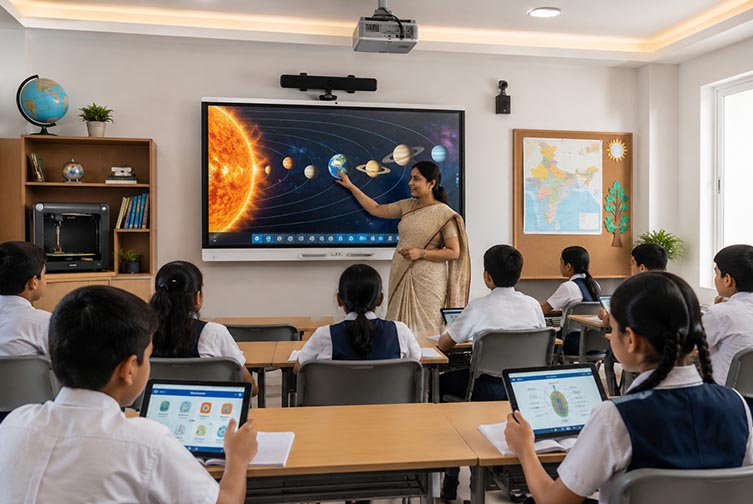
One of the most important upgrades for modern classrooms is the interactive smart board. It replaces traditional whiteboards with a touch-enabled digital display that transforms the way teaching is delivered. Smart boards allow teachers to write, draw, and annotate in real time while integrating videos, presentations, and multimedia content into lessons. They also support cloud-based content sharing and multi-touch collaboration, making group learning more engaging and visually effective for students.
Another important innovation in modern education spaces is the sliding enclosure system. These systems are designed to seamlessly combine traditional writing boards with digital displays. Teachers can easily switch between chalk/marker-based teaching and smart digital presentations without disrupting the flow of the class. Sliding enclosures also save wall space, reduce clutter, and help maintain a clean, organized, and professional classroom environment, especially in institutions using hybrid learning models.
Along with technology, ergonomic and modular classroom furniture plays a major role in improving student focus and comfort. Smart classrooms are now designed with dual desks for space optimization, adjustable study tables, comfortable seating with proper posture support, and integrated storage solutions. Well-designed furniture reduces physical strain, improves concentration, and supports better learning experiences during long academic hours.
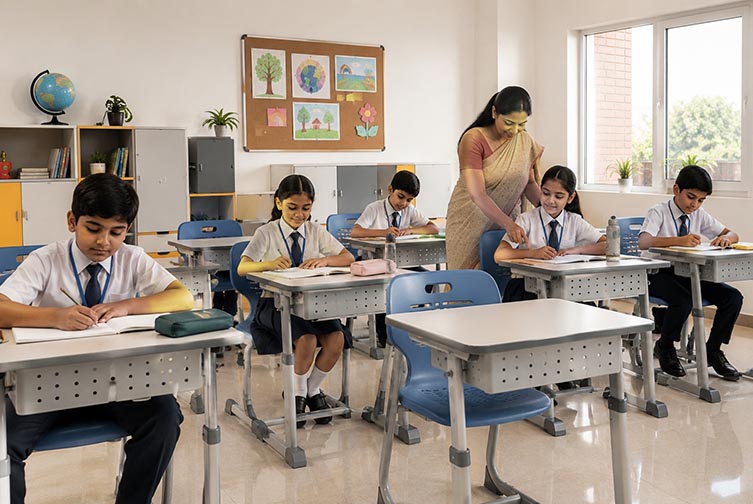
Institutions are also increasingly adopting dual seating smart desks to maximize classroom capacity while maintaining comfort and personal space. These desks allow two students per unit, ensuring better space utilization without overcrowding. They encourage peer learning, improve classroom discipline, and help maintain a structured and organized learning environment, making them ideal for schools and coaching institutes.
Modern smart classrooms also rely heavily on digital learning integration systems. These include online learning platforms, virtual classrooms, cloud-based content sharing, and digital assessment tools. Such systems ensure that learning continues seamlessly both inside and outside the classroom, supporting hybrid and remote education models that are now an essential part of modern academics.
Even in highly digital classrooms, pin-up boards and display systems continue to play an important role in communication and organization. Pin-up boards are used for notices, announcements, and student information, while whiteboards and notice boards help share schedules and quick updates. These traditional tools complement digital systems by ensuring that important information remains visible and easily accessible.
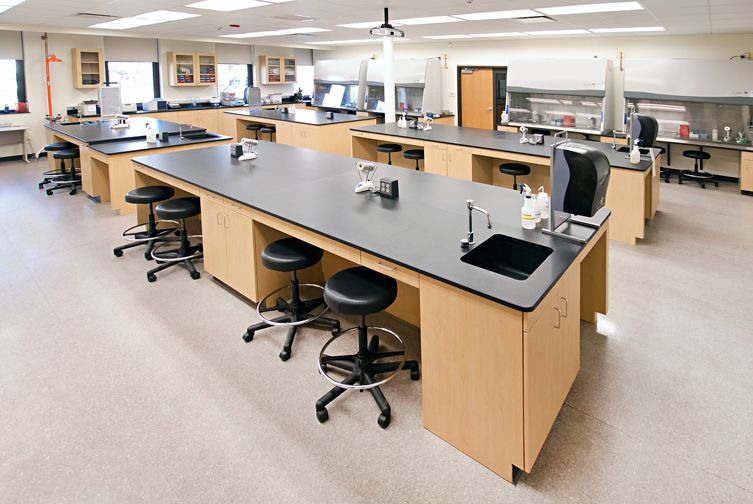
Efficient storage and organization systems are another key component of smart classrooms. Lockable cabinets for teaching materials, student storage units, equipment racks, and mobile storage solutions help reduce clutter and maintain a clean and structured environment. Organized classrooms improve efficiency and allow teachers to focus more on teaching rather than managing space.
Modern classrooms are also enhanced with audio-visual learning tools such as projectors, large display screens, speaker systems, document cameras, and interactive media devices. These tools make lessons more engaging and help students understand complex concepts more easily through visual and auditory learning methods.
Finally, flexible classroom layouts are becoming a standard in future-ready education spaces. Movable furniture, modular seating arrangements, group discussion zones, and reconfigurable teaching spaces allow teachers to adapt classrooms according to different teaching methods. This flexibility supports both traditional instruction and modern collaborative learning approaches.
In conclusion, smart classroom solutions are transforming education by making learning more interactive, efficient, and student-focused. From smart boards and sliding enclosures to ergonomic furniture and digital integration systems, each upgrade plays an important role in enhancing the overall learning experience. Institutions that adopt these solutions today are building a future-ready education system that prepares students for tomorrow’s digital world.