
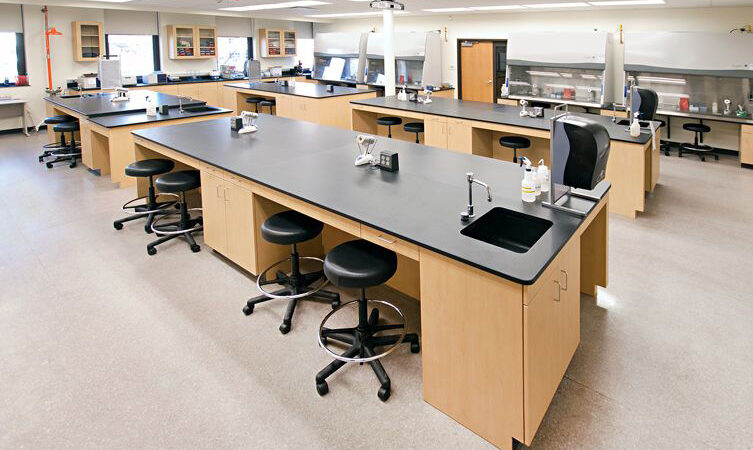
A well-designed science laboratory is the foundation of effective practical learning. For schools and colleges in 2026, laboratories are no longer just functional spaces—they are structured learning environments that must ensure safety, efficiency, durability, and organized workflow. The quality of lab furniture plays a crucial role in achieving these goals. Sapre Boards provides modern lab furniture solutions designed to support Physics, Chemistry, and Biology labs with long-lasting performance and student-friendly design.
A proper science lab begins with a well-planned layout. Before selecting furniture, institutions must ensure that the space allows clear movement between workstations, easy supervision by teachers, and proper ventilation for safe usage. It is also important to separate different lab zones based on subject requirements. Physics, Chemistry, and Biology labs each have unique operational needs, and a thoughtful layout helps maintain safety, discipline, and smooth workflow during practical sessions.
Physics laboratory furniture is designed to support strength, precision, and stability. Since physics experiments involve instruments, measurements, and electrical setups, the furniture must be highly durable and stable. Workstations with strong frames and granite or laminated tops provide the required support for heavy equipment. Open workspace design and storage cabinets help organize instruments and allow group experimentation. In physics labs, stability and functionality are more important than decorative design, ensuring uninterrupted and accurate practical work.
Chemistry laboratories require the highest level of safety and resistance due to exposure to chemicals, heat, and reactions. Therefore, chemistry lab furniture must be built with chemical-resistant surfaces such as granite or epoxy tops. Integrated sinks, reagent storage racks, and gas pipeline provisions are essential for smooth experimentation. Lockable storage cabinets help store chemicals safely, while spill-resistant surfaces and proper ventilation support a controlled and secure environment. These features ensure that students can perform experiments safely under supervision.
Biology laboratories focus on observation, specimens, and microscopic studies, which require clean and hygienic working conditions. Biology lab furniture should include easy-to-clean surfaces, storage drawers for slides and specimens, and sinks for washing instruments. Organized storage systems help maintain proper arrangement of samples and equipment. Hygiene and cleanliness are critical in biology labs, making smooth, non-porous surfaces and organized layouts essential for effective learning.
Modern educational institutions are increasingly adopting modular lab furniture systems. These systems offer flexibility, easy installation, and long-term durability. Made with powder-coated steel frames and laminated boards, modular furniture is resistant to moisture, chemicals, and daily wear and tear. This makes it suitable for high-usage environments such as schools, colleges, and training institutes. Modular designs also allow easy reconfiguration of lab layouts based on changing requirements.
Storage and organization are key factors in maintaining an efficient laboratory. A well-structured lab should include lockable cabinets for safety, open shelves for quick access, and drawers for small tools and samples. Proper storage systems help reduce clutter, prevent accidents, and improve overall workflow efficiency. When everything has a dedicated place, laboratory activities become smoother and more systematic.
Comfort and ergonomics also play an important role in modern lab design. Students spend long hours during practical sessions, so furniture must support proper posture and comfort. Adequate legroom, stable work surfaces, and well-designed seating arrangements help reduce fatigue and improve concentration. Ergonomically designed lab furniture ensures that students can focus better on experiments without discomfort.
Safety remains the most important aspect of any laboratory environment. Modern lab furniture must include heat-resistant and chemical-resistant surfaces, rounded edges for safety, and anti-corrosion finishes. Proper spacing between workstations and clearly defined emergency pathways further enhance safety. These features create a secure environment where students can learn and experiment confidently.
In addition to furniture design, proper lighting, ventilation, and electrical integration are essential for a functional lab. Bright, shadow-free lighting ensures clear visibility during experiments. Good air circulation or fume extraction systems are particularly important in chemistry labs. Safe electrical wiring and backup power support uninterrupted lab operations and protect sensitive equipment.
In conclusion, a modern Physics, Chemistry, and Biology lab in 2026 must be built on three core principles: safety, durability, and functionality. With well-designed lab furniture from Sapre Boards, institutions can create efficient, organized, and future-ready learning environments. Investing in high-quality laboratory furniture not only improves student learning outcomes but also ensures long-term usability and operational efficiency for educational institutions.